
Defensible ongoing monitoring records for accountancy firms
FCA supervision is coming for the accountancy sector. Evidence ongoing monitoring, CDD refresh, and AML review decisions without adding more admin.
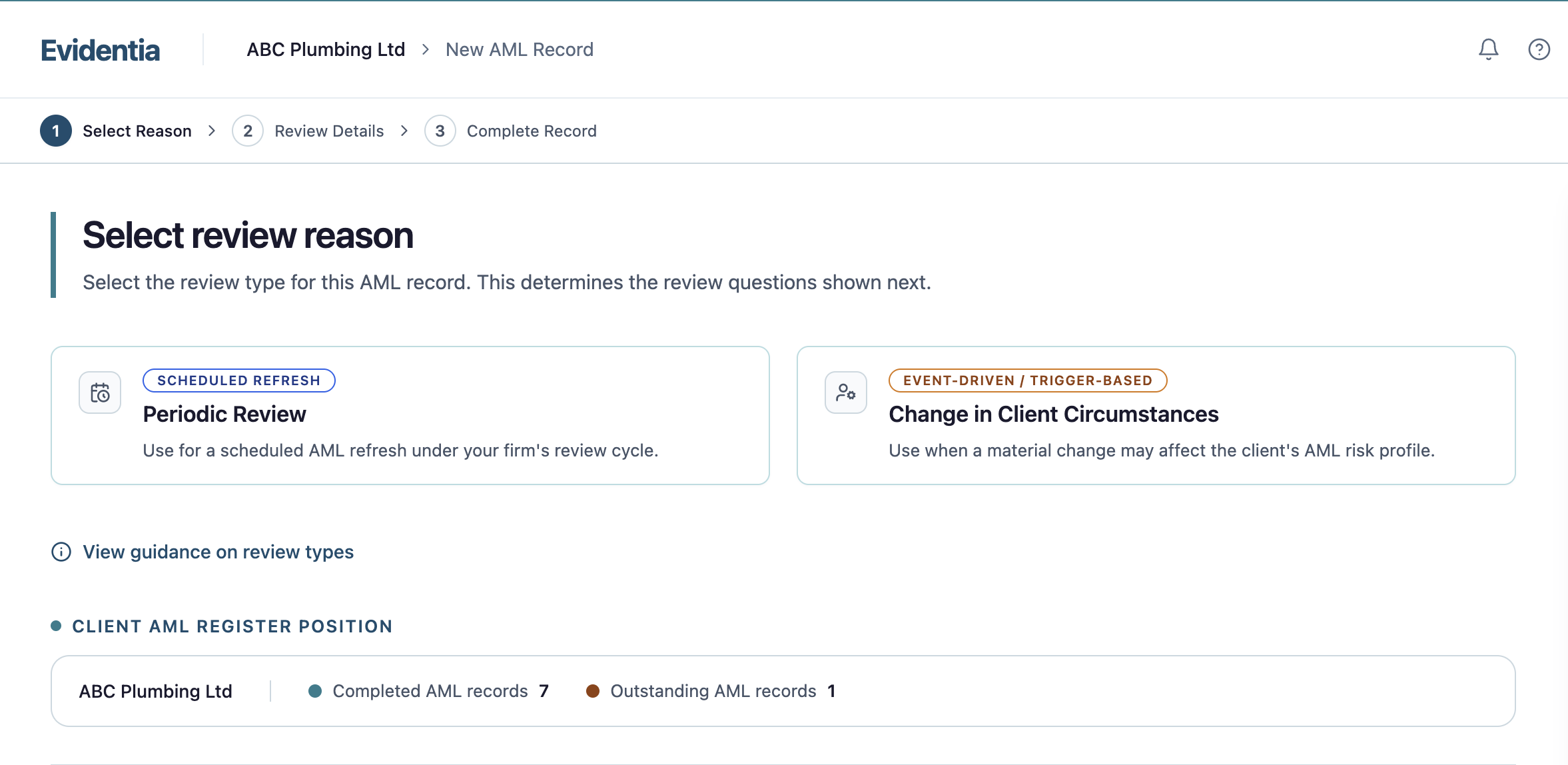

Periodic and event-driven AML reviews that stand up to regulatory scrutiny
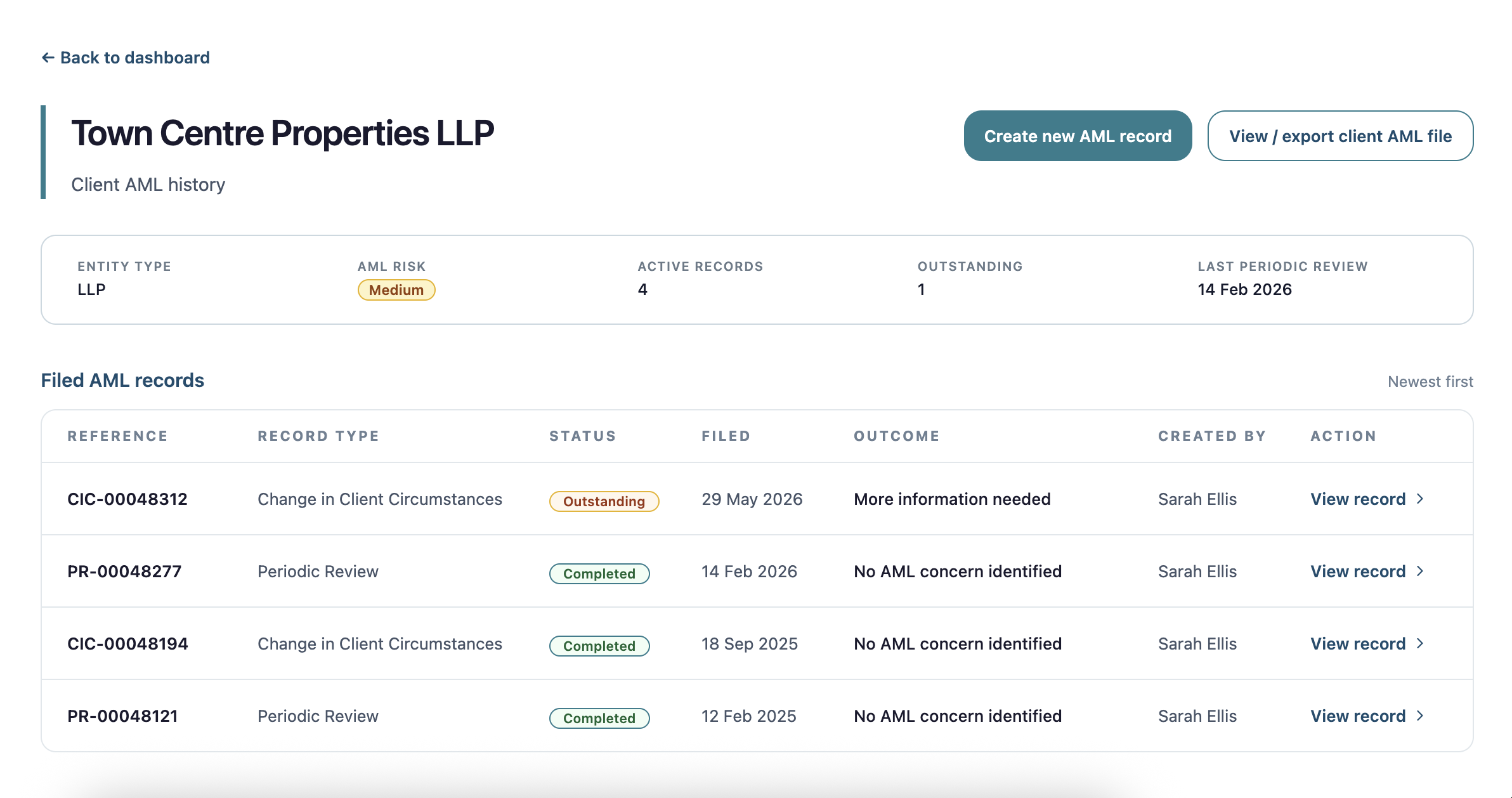
A structured workflow for CDD refreshes and changes in client circumstances
“Small firms face the same money laundering regulatory framework as large organisations, albeit, without access to the same compliance infrastructure. We built Evidentia to help solo practitioners and micro practices evidence ongoing monitoring to a professional standard, even when AML responsibilities sit with one person.”
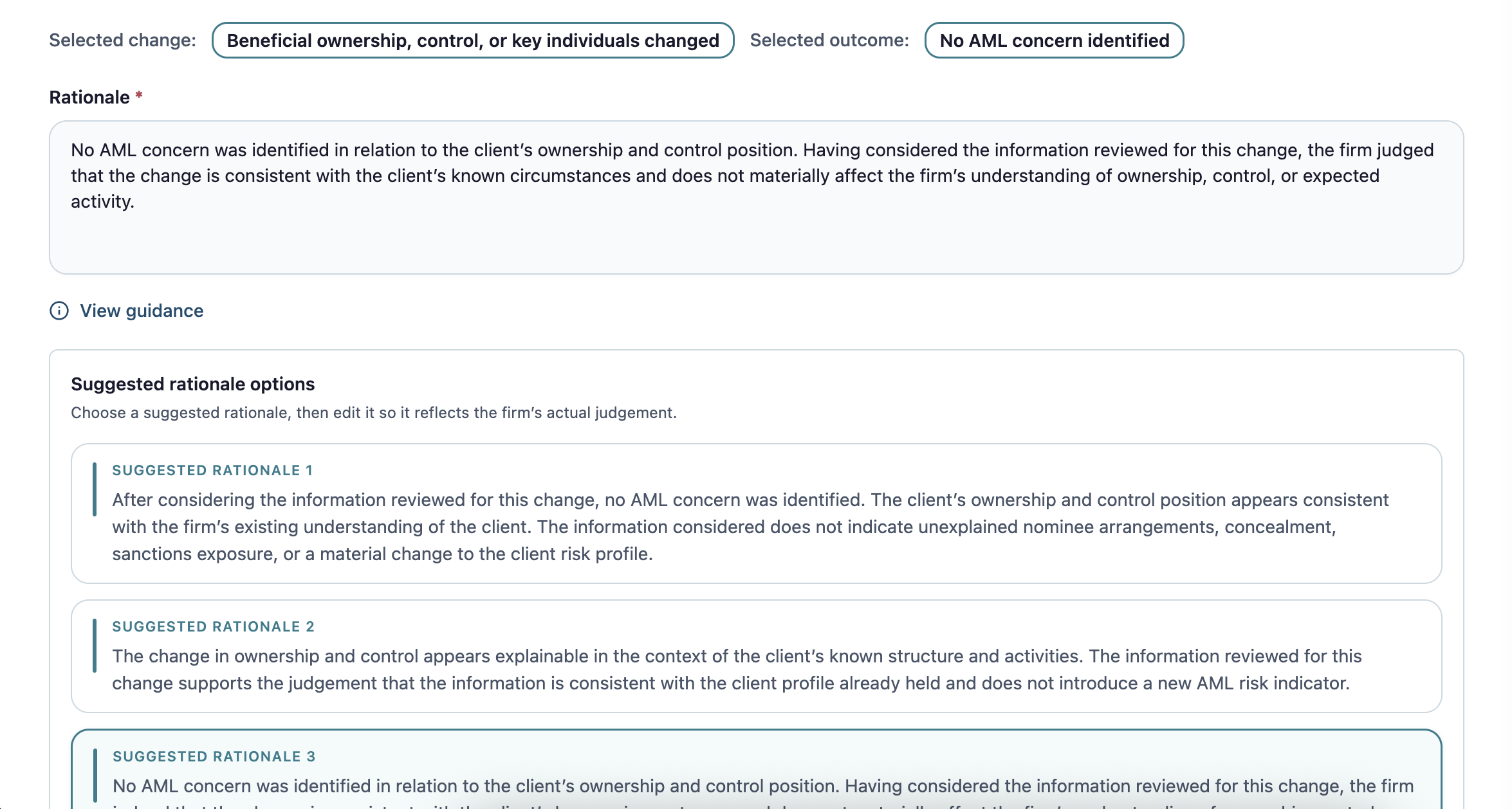
Populated decision rationale built from prior AML review steps
Records should evidence the basis for the AML judgement, not simply the outcome selected. Evidentia generates suggested rationale from the review context, linking the decision to the recorded change and the client information reviewed.
Firms produce a defensible rationale record and reduce reliance on blank free-text notes at the AML decision point.
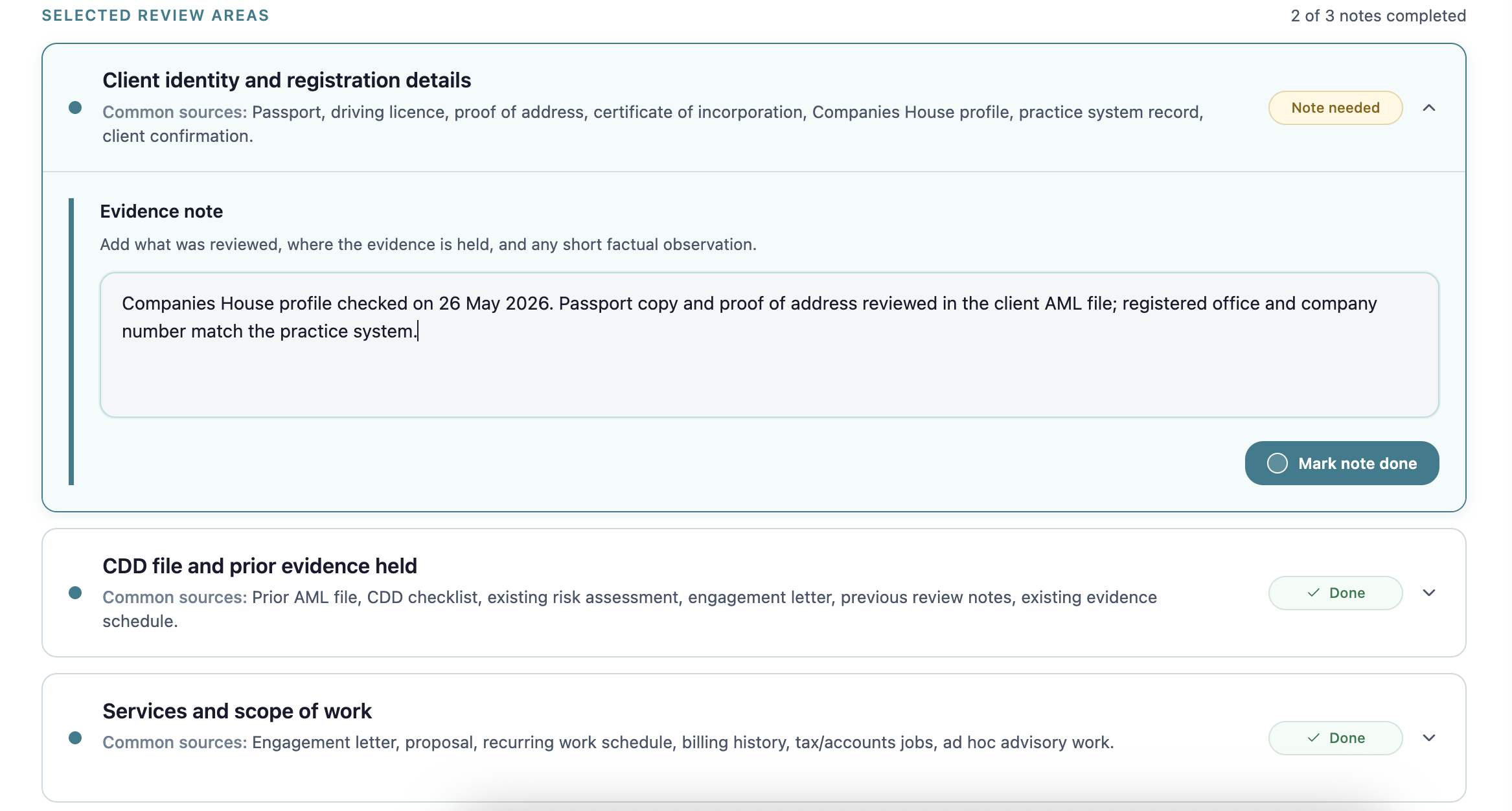
Track the evidence position before the AML record is filed
The Money Laundering Regulations require firms to keep CDD material and related records available after the review is completed. Evidentia records what was checked, where the evidence sits, and whether each review area has been documented before the AML outcome is finalised.
The final record keeps the evidence trail with the AML decision, so the firm is not relying on scattered files, inbox searches, or memory later.
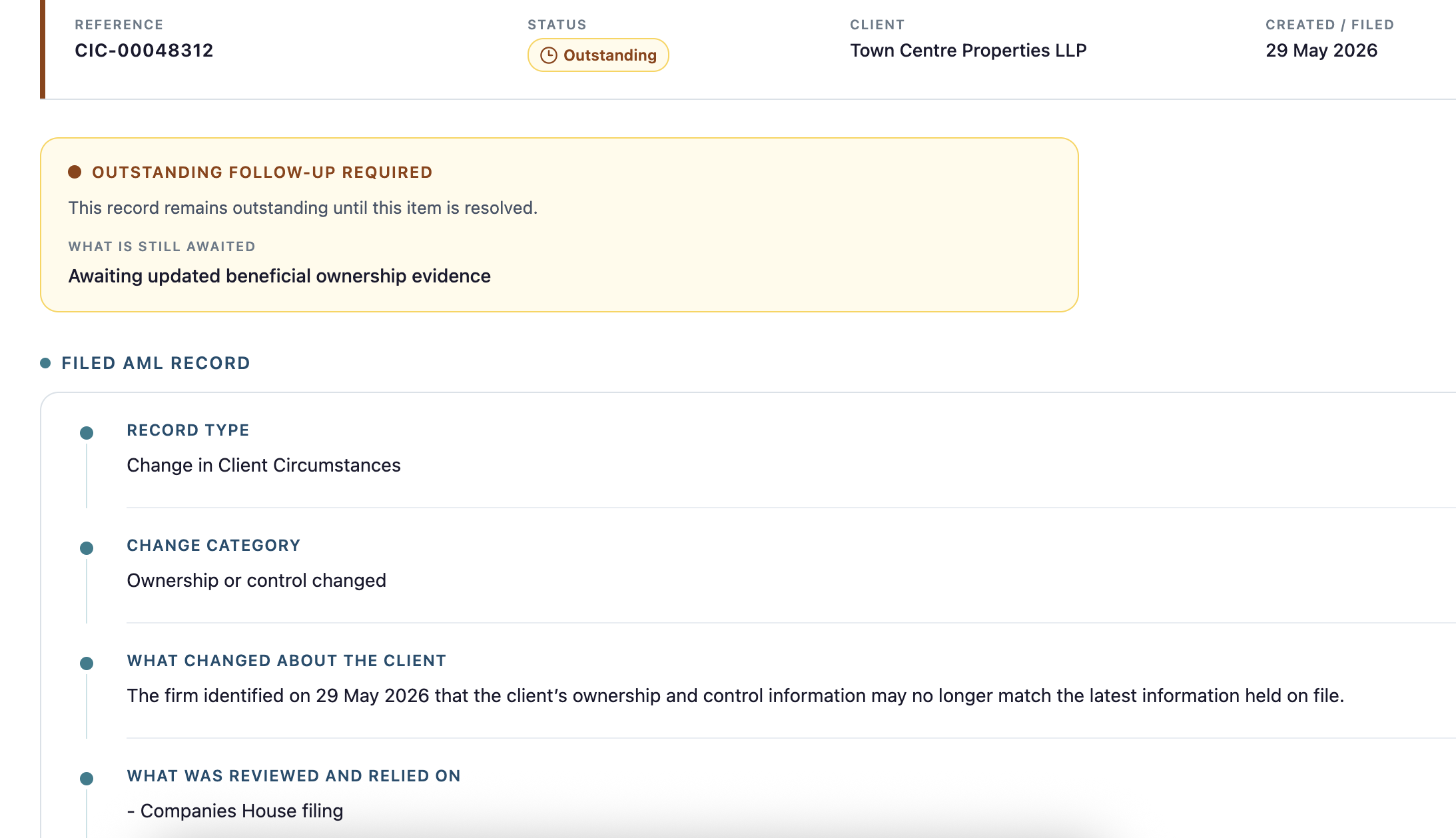
Prevent incomplete AML reviews from being treated as closed
A periodic or trigger-based review should not appear complete while key AML information is still awaited. Evidentia records the outstanding item, such as beneficial ownership evidence, ID documents, or source-of-funds clarification, and keeps the record open until the firm documents what happened next.
The client history keeps the unresolved position visible until the review is updated, aligning with the systems-and-controls approach expected under CCAB AML Guidance.
AML compliance updates and regulatory guidance for the accountancy sector
Stay informed on AML supervision, FCA developments, enforcement trends, and common compliance weaknesses affecting UK accountancy firms. AMLWATCH by Evidentia is written for small practices that need AML insight without the regulatory jargon.

Featured insights

When the FCA could take over accountancy AML supervision
The government has confirmed its intention to move AML supervision for accountancy firms to the FCA. This briefing explains what is known, what remains subject to legislation, and what firms should prepare for now.
It also sets out why small firms should treat the transition as a planning issue now, rather than waiting for the final timetable to be confirmed.
Read the briefing
What to check when refreshing CDD for existing clients
CDD refreshes should do more than confirm that old documents still exist. This guide explains the client details, ownership information, risk factors, and evidence points firms should review for existing clients.
The article is designed to help firms approach CDD refreshes as a structured AML review, not a loose file update.
Read the guide
What ongoing monitoring means in everyday practice
Ongoing monitoring is not a one-off onboarding task. This insight explains how firms should keep client information under review, identify trigger events, and document AML decisions during the relationship.
It gives small practices a clearer view of what ongoing monitoring requires after the client has already been accepted.
Read the insight